
2023-2024 · Shipped, in active use in schools today

Aegix
Emergency management software designed for schools and first responders operating in a crisis.
- Role
- Product Designer: sole designer across mobile and web (AIM, MAP, AIR, SMS)
- Timeline
- 2023-2024
- Status
- Shipped, in active use in schools today
- Stack
- Figma, Mobile, Web

The problem
During a critical incident at a school, the people using the software are under the most stress they will ever experience at work. Nobody reads instructions. Nobody explores menus. Motor skills degrade, tunnel vision sets in, and every second of interface confusion has real consequences.
That inverts almost every normal design instinct. I judged the product by whether a panicking person could operate it correctly the first time. Engagement and delight did not matter if the interface slowed a response.
The decisions
Every critical action assumes shaking hands and divided attention: fewer, larger targets; one decision per screen; state communicated in text and color, never color alone; confirmation patterns that prevent mis-taps without slowing response.
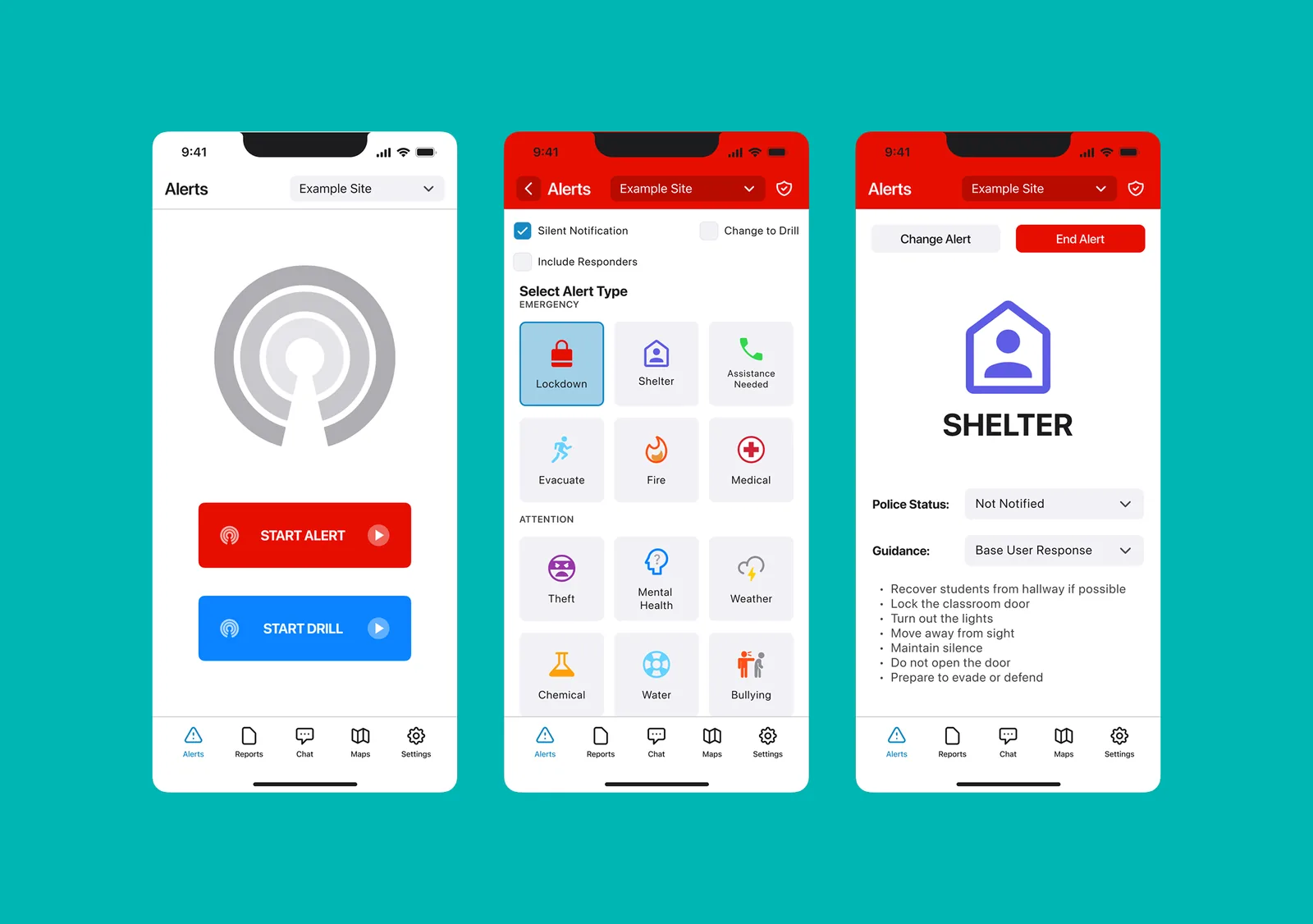
During an incident, people need to know what is happening everywhere. I designed the mapping and accountability views so that status (who’s accounted for, who isn’t, where responders are) reads in seconds without interaction.
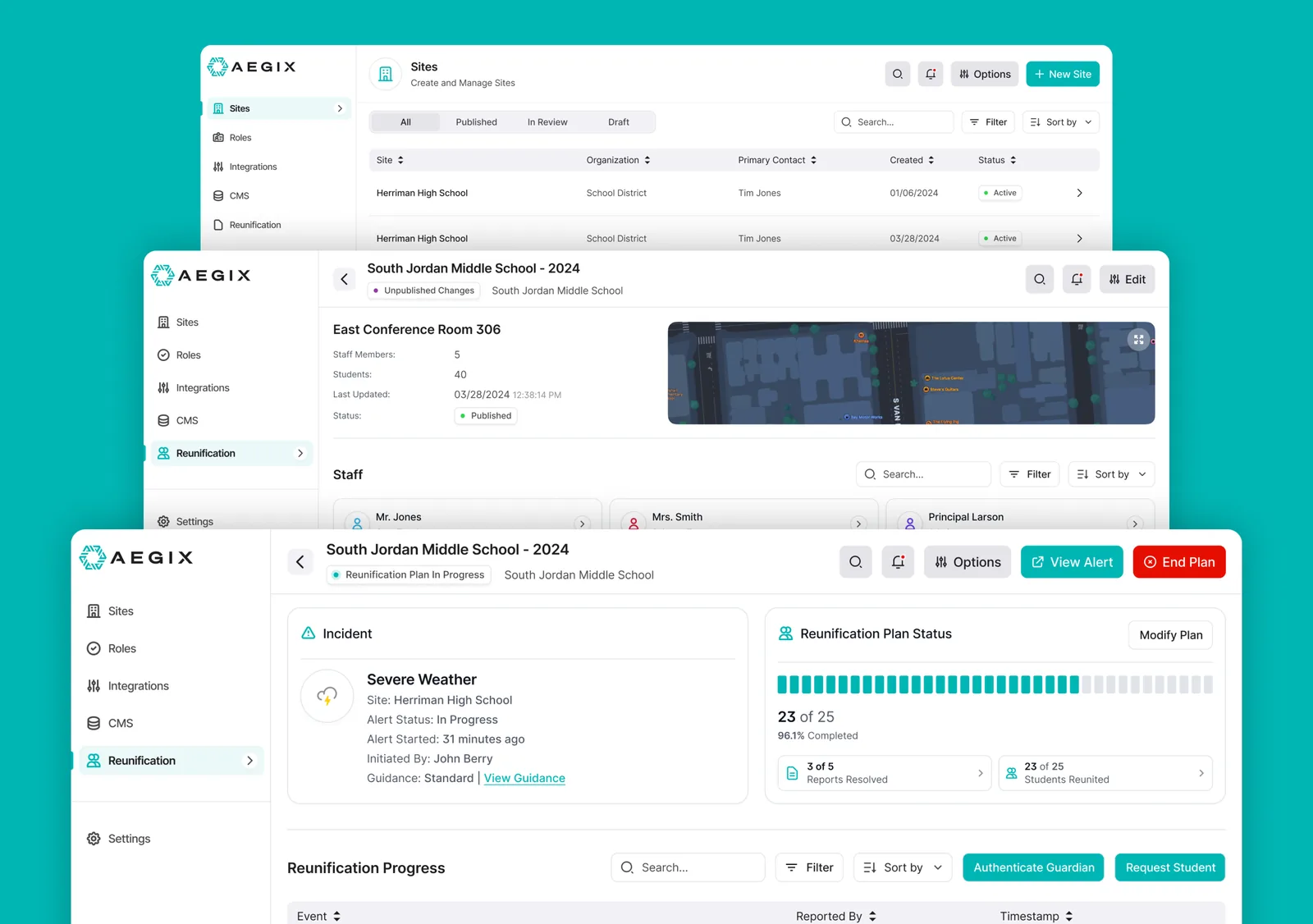
After an incident, parents and children are matched and reunited through the platform. I made that flow procedural, unambiguous, and impossible to complete out of order for people working at an emotional moment.
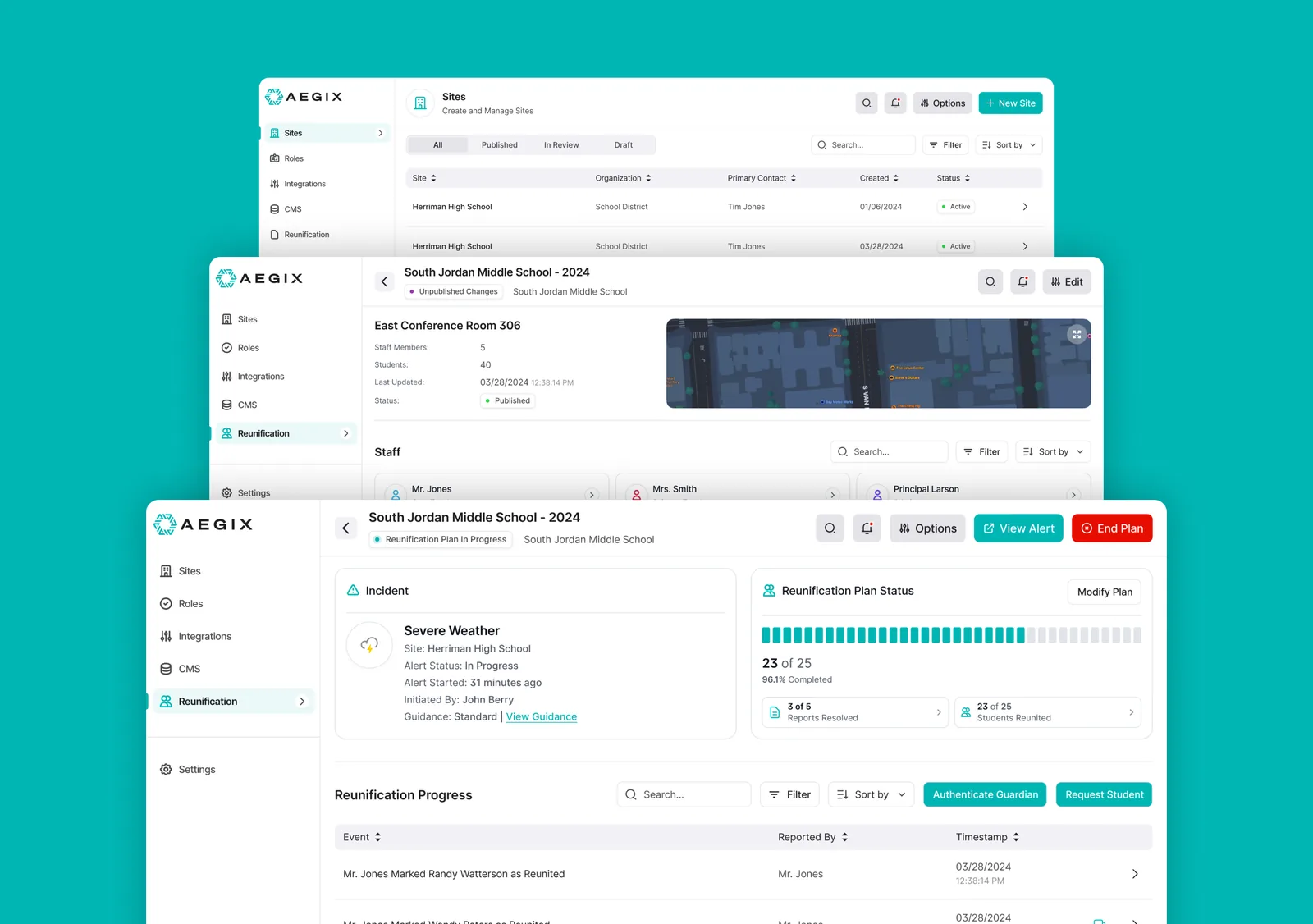
What shipped
The mobile and web experiences across the Aegix platform: AIM (incident management), MAP, AIR, and SMS, covering real-time communication, incident coordination, accountability, and reunification.
Outcome
I designed the platform in 2023-24; the rollout and coverage below continued after my tenure. It’s in active use in Utah schools today, including Skyridge High School, whose district partnership is linked below. The work focused on reducing the time required for school-wide communication, helping responders understand conditions on the ground, and keeping student reunification orderly after an incident.